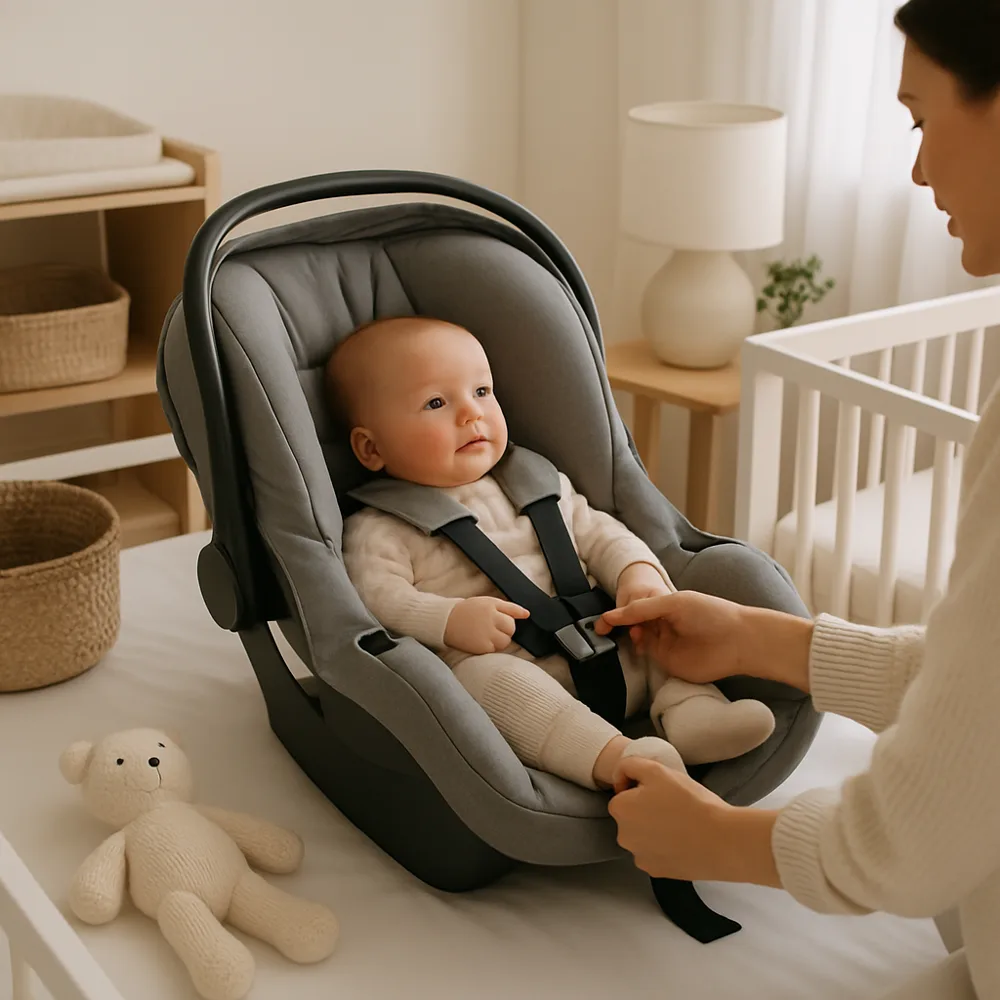
A baby's sleep space should be designed around safety, not decoration. Use a crib, bassinet, or play yard that meets applicable safety standards and is in good condition. The sleep surface should be firm, flat, and covered only by a fitted sheet made for that product. Keep pillows, loose blankets, stuffed toys, positioners, and other soft objects out of the sleep area.
Place your baby on their back for every sleep, including naps, unless a healthcare professional gives you different medical advice. Room-sharing without bed-sharing is recommended by many public health authorities; check the current guidance where you live. Avoid products marketed for sleep that have not been designed and approved for that purpose, and do not improvise with inclined surfaces or extra padding. Follow the product manual for setup, use, and weight or developmental limits.
Make the space easy to use at night by keeping diapers and caregiver supplies nearby but outside the crib or bassinet. If you use a wearable blanket, choose the right size and avoid adding loose bedding. Check for product recalls and inspect hardware regularly. A calm-looking nursery is optional; a clear, correctly assembled sleep surface is the essential part. When in doubt about a sleep product, ask your baby's clinician or consult current public health recommendations.