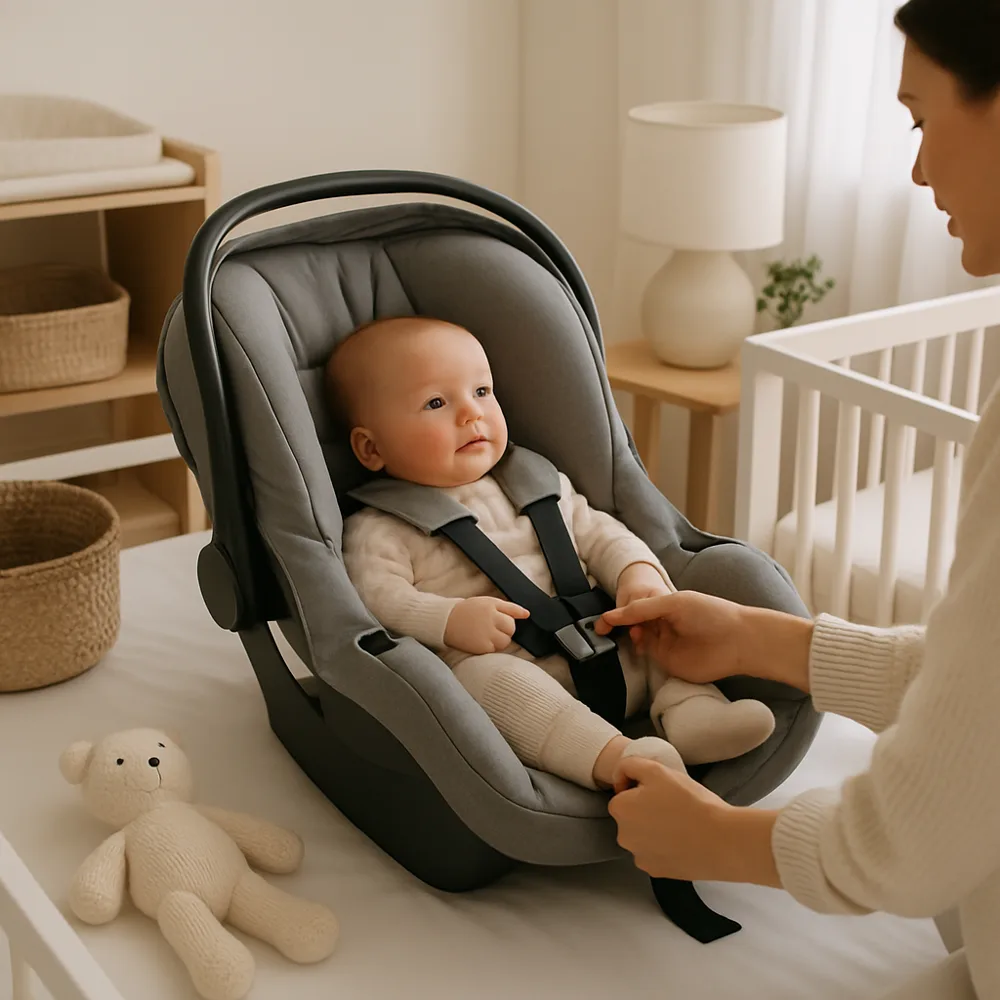
A feeding corner can be as simple as a comfortable chair and a clear surface nearby. Choose a seat that supports your back and lets your feet rest comfortably, using a footstool if it helps. A small table or basket can hold water for the caregiver, burp cloths, and feeding supplies. Keep the path to the chair clear, especially during nighttime feeds.
Good lighting helps you see what you are doing without making the room feel harsh. A nearby lamp can be more useful than a bright overhead light, while a night-light may help with movement around the room. Keep cords, hot drinks, and small items away from the baby. If you are bottle-feeding, prepare and store feeds according to current guidance; do not prop a bottle or leave your baby unattended.
Feeding needs can change, so avoid investing in a setup before you know what is comfortable for you. A cushion may support the caregiver, but do not use soft cushions or positioning products inside a baby's sleep space. If nursing is painful or feeding feels persistently difficult, seek support from a qualified lactation professional or healthcare provider. The corner should make a necessary task easier, not create pressure for a particular feeding method. Adjust it as your baby's routine and your own comfort change.